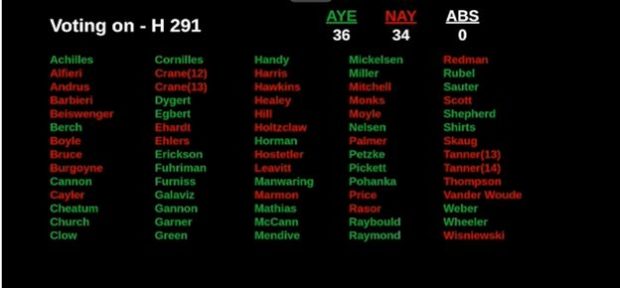
On Wednesday, the Idaho House of Representatives engaged in a heated debate over House Bill 291, known as the “High-Needs Student Fund” bill. This important legislation aims to create a dedicated fund to assist Idaho public schools in managing the extraordinary costs associated with educating students with significant disabilities. These students often require essential services—such as ASL interpreters, feeding tubes, specialized nursing care, and extended school-year services—which are critical for their educational success.
Despite the clear and pressing need for this support, some legislators dismissed the bill as just another expense, arguing against taxpayer funding for these services and claiming that schools already receive adequate funding for special education. The passage of this legislation was narrow, and the debate was troubling. Instead of focusing on the urgent needs of these students, some representatives suggested that schools should simply reallocate their budgets. They questioned the necessity of providing high-cost special education services, with some opponents asserting that sufficient funding has already been provided to schools, implying that schools could find ways to cover these costs from other budget areas.
Idaho is one of only two states without a specific program to support public schools in addressing these high-cost needs. The school districts are only asking for a $3 million appropriation—a small fraction of the estimated $80 million gap in special education funding that exists in our public schools. It also requires school districts and charters to exhaust other funding avenues before applying to this fund. This debate followed closely on the heels of the legislature’s approval of a school voucher bill, HB93, which allows for up to $7,500 per student to be used for private school tuition for qualified students with disabilities. However, it is important to note that private schools are not obligated to enroll students with disabilities, are not held accountable for the use of taxpayer funds, and can choose to unenroll students at their discretion.
While I am grateful to those Representatives who supported this bill and stood by our high-needs students, I am deeply disappointed that 34 members chose to turn their backs on essential services for students with disabilities. Public schools are legally mandated to educate every child, regardless of their abilities. The actions of those who voted against this bill send a clear message: they are willing to endorse taxpayer funding for private school tuition without restrictions, yet they are unwilling to invest in the students who need our support the most.
Our public schools form the backbone of our communities. They should not have to “beg for scraps” to adequately serve students with disabilities while the legislature prioritizes unaccountable private school subsidies. Idaho’s children, particularly those with special needs, deserve far better.