Of the 85 charter schools in Idaho, five use Hillsdale College’s K-12 curriculum.
American Classical Schools of Idaho are quickly gaining popularity: the first ACSI school opened in 2019, with their third and fourth schools scheduled to open in 2026. What is so different about these schools that draws families in?
A key factor is Hillsdale College’s K-12 curriculum and specifically trained teachers.
The Michigan-based, Christian liberal arts college provides choice K-12 schools with the curriculum and training to give students an “American classical education.”
It requires students to study Latin — the etymological origin for many words in English and the romance languages of Spanish, French, Portuguese, Romanian and Italian — some of which, Hillsdale students must also study.
“Hillsdale schools do not make technology the focus,” said Kathleen O’Toole, Hillsdale College’s associate vice president for K-12 education. “…There’s not a lot of technology that is required to understand some of the greatest works that have ever been written.”
O’Toole likens the Hillsdale education to what her great-grandfather, who was a public school teacher, might’ve taught in a traditional public school two generations ago. It’s essentially old school.
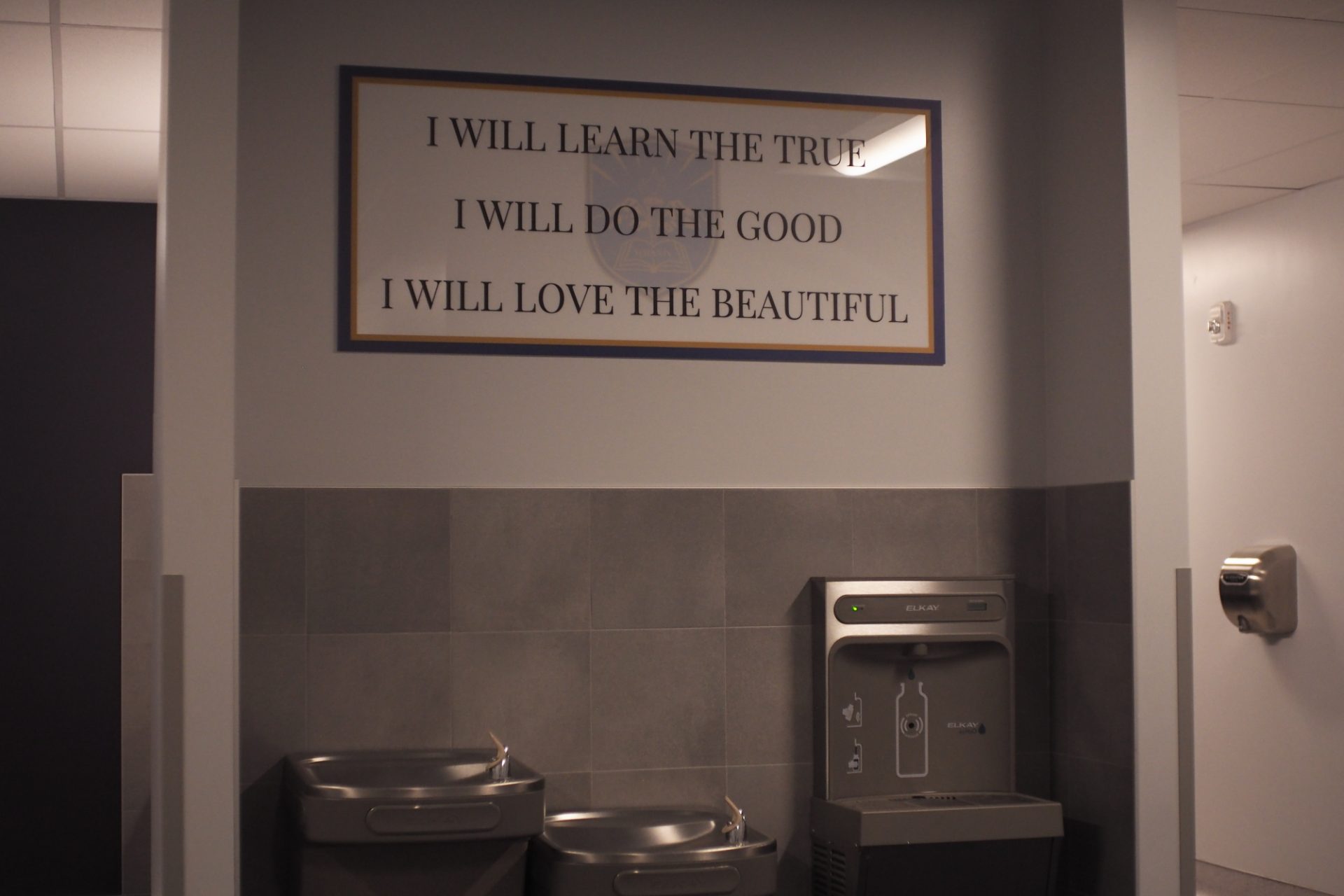
Students read classical literature and poetry, covering the works of Virgil, Homer, George Orwell, C.S. Lewis, Fyodor Dostoevsky and William Shakespeare, among others.
Elementary-aged students learn Singapore math, a method created by the Singaporean government and used by some U.S. schools since around 2000.
Hillsdale member schools are private or charter; Hillsdale assists them in the founding process, and the college trains their staff and trustees.
But there are far more schools wishing to use the Hillsdale curriculum than the college can support as member schools. So there is a lower tier: the curriculum school.
If Hillsdale approves a school’s application to the curriculum school program, they provide a free license to use the Hillsdale curriculum. Curriculum schools do not receive the same support as member schools, but are allowed to use the full Hillsdale K-12 curriculum.
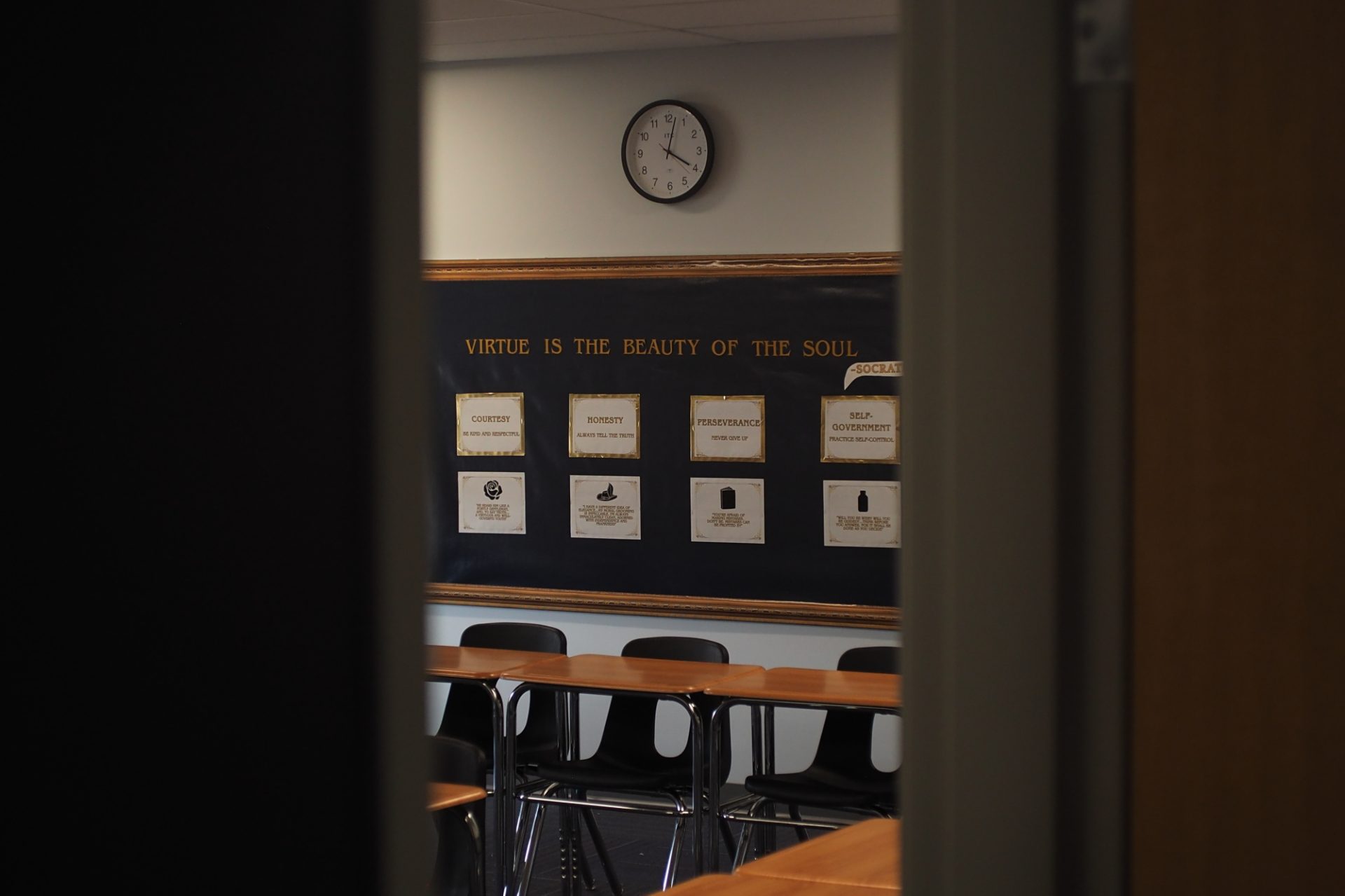
Not every school can be a Hillsdale school, though — first, it must make the cut.
“When we look at applicants to that program, we look at the mission of the school: ‘is it aligned [with Hillsdale]?’,” O’Toole said. “We also look at the school’s ability and intention to use the Hillsdale curriculum.”
It takes a certain size of school to employ the Hillsdale curriculum correctly, O’Toole explained. Some schools don’t have the time or the number of teachers necessary to teach everything the curriculum includes.
“Sometimes a school may be mission-aligned, but it doesn’t have the ability to teach the school curriculum because of something else particular about the school. In that case, we wouldn’t be able to provide a license,” O’Toole said.
The next Hillsdale-supported schools opening in Idaho are the North Idaho and Valor classical academies, members of the American Classical Schools of Idaho. They will join Novus, Treasure Valley and Kootenai classical academies as the only Hillsdale member and curriculum schools in Idaho.