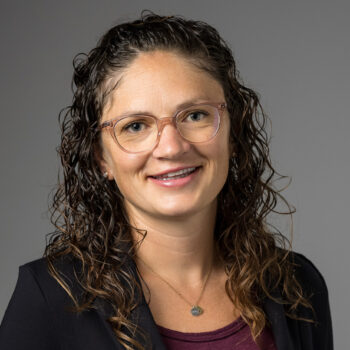
Editor’s note: EdNews received more than 1,200 emails — sent to and from West Ada district leaders and teacher Sarah Inama between March 10 and March 25 — via a public records request. West Ada trustees and administrators have declined interview requests on the classroom sign controversy, but the emails provide new insight on what transpired behind the scenes.
As outrage mounted over West Ada teacher Sarah Inama being ordered to remove a sign promoting inclusion, district leaders stayed quiet — at least publicly.
Trustees and administrators did not send out a press release, call a special meeting, host a public hearing or grant interviews to mainstream media.
But behind the scenes, trustees and Superintendent Derek Bub were crafting a public message — though one has yet to be released.
EdNews received copies of the press release drafts through a public records request. The drafts, sent back and forth between Bub and trustees, shift dramatically in tone from angry and defensive to conciliatory and apologetic to concise and professional.
And they shine a light on the district’s inner turmoil as it sought — and apparently failed — to find a unified voice.
West Ada spokesperson Niki Scheppers has been the only district representative to provide official responses to media inquiries.
But at least two trustees have broken the silence. Trustee René Ozuna posted a statement on her social media account, and Trustee Dave Binetti appeared on The Ranch Podcast (as did Marcus Myers, the district’s chief academic officer).
Both Ozuna and Binetti emphasized that their opinions were theirs alone, not those of the district or the board. And they reflected some notable differences of opinion.
Internally, West Ada leaders were grappling to ensure staff members were falling in line with district policy and messaging.
But even among the top ranks, there were discordant views. EdNews reviewed hundreds of emails sent by administrators, some that divulge their personal opinions on the controversy — some supportive and others disapproving.
Together, the records EdNews reviewed paint a picture of a district at odds, and unable to communicate as one with the public — even as Idaho’s top education official, State Superintendent Debbie Critchfield, weighed in on the controversy.
“I encourage them to reach out to their community and find solutions,” Critchfield told Idaho News 6. “I know they care about their kids and educators, and communication is such an important part of resolving some of the concerns.”

Press release drafts show school leaders’ frustrations, struggle to get on same page
As early as March 13, two days after Inama’s KTVB interview, Bub was working with school trustees on messaging regarding the controversy. There would end up being seven drafts, according to records EdNews received. They varied in length and tone, but none were released to the public.
One early draft was written as a letter from Bub to the public. The draft letter announced that each school would get banners featuring the phrase “Everyone is Welcome Here” with each school’s mascot and colors.
“This maintains a professional tone, ties in the district’s strategic plan and core values, and delivers a clear, concise message,” Trustee Angie Redford wrote to Bub about the letter.
The other six drafts were written as letters from the trustees to the public.
One of the more revealing drafts indicates it was intended to be sent over West Ada’s spring break, the week of March 17. “This is a time-sensitive issue driven by media attention and we felt compelled to respond as quickly as possible,” the draft said.
The draft reiterated the message that all students are welcome at the district, and said the district would be providing signs to that effect.
It also described the process behind the district’s policy on classroom displays, which was established to ensure teachers can “do their job in peace,” according to the draft.
“You see, our teachers have to work in an environment where everything … they say and do is subject to second-guessing, and could at any moment be the subject of a scurrilous media campaign,” it said. “And that’s exactly why we created 401.20 — so that our teachers could teach, our parents could relax, and our kids could learn.”
But enforcing the policy proved difficult at times.
“The line between ‘focus’ and ‘distraction’ isn’t always obvious, and when you multiply that by 58 schools with hundreds of rooms and thousands of signs — you can see where that gets awful hard, awful fast,” the draft said.
But the process had worked, according to the draft. In hundreds of cases, teachers were provided guidance, and compromise was reached — “until now.”
“This time, a teacher had a sign that contained the same ‘Everyone is Welcome’ text that we all agree with,” the draft said. “But there was additional graphics that were on the bubble but ultimately determined to have crossed the line of being potentially political.”
The draft press release also included expressions of disappointment in Inama: “Unfortunately, in this case the grievance process was bypassed and instead the media were contacted — and things went quickly downhill.”
That was followed by a critique of news outlets: “The media care neither about principle, nor learning, nor kids. They care about clicks. And nothing stirs up more clicks (than) controversy. So the controversy machine kicked into high gear, and since the Board was not able to respond immediately, the narrative started to build that West Ada was something less than welcoming.”
“I can only say that I hope you’re never accused of being a racist by hundreds of people across the country you’ve never met with no ability to respond,” the draft continued.
The draft expressed a continued commitment to upholding policy 401.20: “We’re keeping our policy because we know it works.”
A similar draft excluded critiques of the media, and was less directly critical of Inama — but it still doubled down on the school’s classroom sign policy.
Subsequent drafts dropped direct critiques of the media and Inama
Other drafts were less direct.
One included apologetic language: “This situation caused unintended pain, and we feel for our community, staff, and administrators. Mistakes happen — what matters is how we grow. Let’s move forward with compassion and understanding. I’m proud to lead this special district through highs and lows.”
Another acknowledged ongoing disagreement among trustees on how to handle the situation, and how to determine whether a classroom display distracts from learning or has the potential to do so.
“We do not presume to know exactly where that line should be drawn every time. Indeed, as individual Trustees we have differing opinions that we value even if we disagree,” the draft said. “This is true of this instance as well. However, we can say with one voice that should these disagreements not be reconcilable, we wish to err on the side of our curriculum. “
One was cut and dry — it shared the district’s mission and reaffirmed that all students were welcome. Another dropped the idea of “Everyone is welcome here” signs at every school.
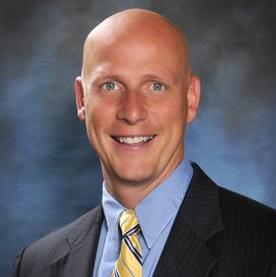
Timelines for public communication shifted as Bub told one patron he was “heartbroken” over the controversy
While the first draft indicated it was intended to be shared over spring break, at some point that target changed to after spring break, according to an email Bub sent to Elizabeth McLaughlin on March 16.
“I am developing a calculated response over the break and plan to release this upon our return,” Bub wrote.
McLaughlin, a teacher at Lake Hazel Elementary, wrote to Bub on March 15 asking him to reconsider and evaluate the policy “to make sure we are showing our kids that we care. All of our kids.”
Bub’s response indicated his feelings on the matter. He said he was “heartbroken over the events and narrative that played out last week.”
“This is not who we are,” he wrote. “Thank you for continuing to believe in the work we are doing, we will be better from this.”
More than three weeks after the initial controversy, and after multiple drafts and moving deadlines, the district has yet to release a statement.
Binetti breaks silence by giving interview to “new media”
While West Ada’s five trustees have been broadly silent, two spoke out.
Trustee Dave Binetti gave an interview on The Ranch Podcast, which aired on March 14.
“It’s nice to be able to go on new media versus legacy media, which may have different objectives,” Binetti said to Host Matt Todd, invoking language used by President Donald Trump’s staff in regards to media.

In the podcast, Binetti hit on some of the same points mentioned in press release drafts. He went over the history of the district’s classroom sign policy and reiterated that all are welcome.
“We are all on the same page … Everybody agrees that everybody is welcome in West Ada … That’s self-evidently true,” Binetti said.
And he also criticized the media, who he said have their “own agenda.”
“And their agenda doesn’t have anything to do with educating kids, right?” he said. “The news media’s agenda is to stir up controversy, and they’re very good at it.”
Binetti said he was “so disappointed” that Inama had gone to the media instead of working with the district internally to resolve the issue. “I really wish that a different choice had been made there.”
The controversy is “taking away from the things that we’re supposed to be focused on, which is educating our kids,” he said.
And he mentioned House Bill 41, which Gov. Brad Little signed into law on March 19.
The law prohibits flags that “represent a political viewpoint, including but not limited to flags or banners regarding a political party, race, sexual orientation, gender, or a political ideology.”
The law allows the U.S. and Idaho flags, along with a lengthy list of other exceptions, including official flags representing Native American tribes, colleges and universities and foreign nations, EdNews previously reported.
At the time of the podcast, the bill had not yet been signed into law, but Binetti said if it passed it would reaffirm West Ada’s handling of the classroom sign.
“We’re now facing a state law that is saying you can’t racialize these statements, right? So if we can’t racialize those statements, then you know, this is pretty clearly in violation of that,” he said.
He said the new law “is designed to avoid that division and that rancor and that fundamental political friction that frankly just doesn’t belong in our classrooms and certainly not at this level.”
In social media post, Ozuna calls for policy discussion, decision review
Trustee Renee Ozuna also broke the board’s silence with a statement she made on her personal social media page — and it contained some significant departures from Binetti’s stance.
Like Binetti, she reiterated that all students are welcome at West Ada.

But she said she didn’t agree that the message of inclusion should be seen as political. And while Binetti stood by the district’s actions, Ozuna struck an apologetic tone: “I also recognize that understanding why this happened doesn’t take away the pain and anger it caused, and for that, I am truly sorry. My heart hurts with you. For those struggling to make sense of this decision, I hope this provides some additional context.”
Ozuna also requested a review on the decision and a discussion on the policy. “I believe we can do better,” she wrote.
Emails show top West Ada administrators had opposing views on sign removal controversy
Geoff Stands, the district’s director of safety and behavior, defended the district’s sign removal request when a former West Ada teacher, Helyn Haase, wrote in to say she was embarrassed by the district’s actions.

Stands wrote back urging Haase to listen to Myers’ interview on The Ranch Podcast. Haase did so, but responded to say she still disagreed with Inama having to take down the sign with hands of different skin colors.
“It just seems nitpicky and quite frankly comes across to the general audience as being racist,” Haase wrote.
Stands said the classroom environment “has changed drastically” from when Haase taught.
“I agree that there is a huge political divide and unfortunately over the past several years it has become a large distraction in the classroom,” he wrote.
But Stands also didn’t seem to budge on the district’s position: “Speaking for myself and on a personal level, I have never needed signs or symbols to convey to the students that I love and care about them.”
Haase said she still thought the board of trustees should revisit this policy and “allow teachers some autonomy to create a supportive learning environment, and actually talk to the local news media and answer the hard questions the public is asking rather than doing it on a podcast that personally I and many people have never heard of.”
While Stands stood behind the district’s actions, Dustin Barrett, the district’s director of curriculum and instruction, expressed his dissent in an email.
Bailey Graham sent a message to Barrett on March 10, saying that the policy was “absurd and unacceptable!” She urged him to drop the policy and “let teachers keep positive signs in their classrooms.”
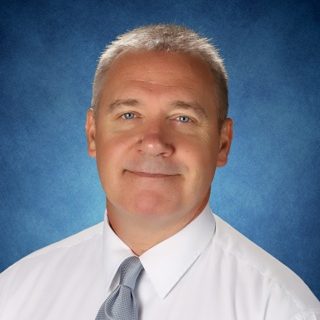
“Wholeheartedly agree,” Barrett wrote back. “None of that material came through me or my office; however, I will pass your message along to Executive Leadership.”
Internally, West Ada leaders were taking steps to get staff members on the same page, including sending a letter to staff on March 12 that used sports analogies in an attempt to motivate them to follow policy 401.20.
“Every player knows that while they bring their own strengths and personality to the game, they must operate within the rules to maintain fairness and consistency,” the letter said. “If one player decided to wear a different uniform, use a different-sized ball, or ignore the rules, the game would lose its structure, creating confusion and imbalance. Similarly, West Ada Board Policy serves as our rulebook, ensuring that all visual aids and displays in classrooms align with district guidelines and contribute to a focused, distraction-free learning space.”
The letter also defended Marcus Myers, the district’s chief academic officer, who had caught much of the flack from the controversy.
The letter didn’t seem to go over well. At least five members of the public complained about the letter, which was shared by KTVB.
“Instead of acknowledging the error in judgment, you chose to double down with a patronizing sports analogy, as if ensuring that every child in our district feels safe and valued is a strategic game rather than a moral imperative,” wrote Emily Mortensen, a West Ada parent, in a letter to trustees, Bub and others. “This response reeks of condescension and cowardice, attempting to trivialize parents, students, and educators’ serious concerns.”
A few days later, on March 14, Bub called for an all-administrator meeting, telling staff “it is imperative that we address some concerns face to face.” He announced the meeting just four hours ahead of time.
What’s next for the district and Inama
The West Ada School Board is scheduled to hold its next regular meeting on April 14. No agenda has been posted yet, so it’s unclear if the sign controversy or the district’s classroom sign policy will be addressed. Board regular meeting agendas must be posted two days beforehand.
“The district acknowledges the community’s feedback and remains committed to listening to all perspectives,” Scheppers wrote in a March 25 email. “Any future communication or public engagement on this matter will be considered in accordance with board policy and established procedures.”
As for Inama, she said she’s considering leaving West Ada School District, and emails show that she requested and received a letter of recommendation from her principal.

“I do love these kids and I do love this school … the teachers here are amazing,” she told EdNews in a phone interview. “But it’s also a workplace … and you want to be somewhere where you feel like you have a good working relationship with your employers, and you feel that your values align.”
Inama said she still doesn’t understand why her sign is seen as problematic, more than three weeks after her interview with KTVB sparked a national discussion and controversy over the district’s sign policy.
“I really still don’t understand how it’s a political statement,” she said. “I don’t think the classroom is a place for anyone to push a personal agenda or political agenda of any kind, but we are responsible for first making sure that our students are able to learn in our classroom.”
And that, she said, means ensuring they all know they are welcome.