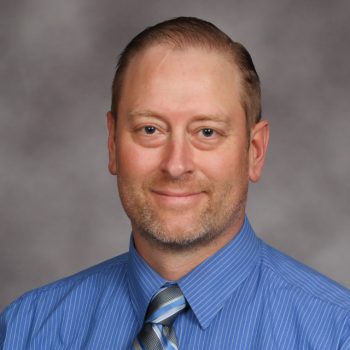
As superintendent of Ririe School District, I oversee the education of just over 700 students in our small, tight-knit farming community east of Idaho Falls. From my office window, I can see the fields that many of our students’ families have farmed for generations. Today, I’m watching a storm gather on the horizon—not over those fields, but over the future of rural education in Idaho.
The Legislature’s proposed new school funding formula might sound good in a Boise conference room, but here in Ririe, it threatens the very foundation of our educational system. Let me explain why, through the reality I live every day.
In our district, we must provide the same core educational programs as any large urban district. When I walk through our high school halls, I pass our science lab. Some class periods might have 20 students; others might have 8. But I can’t employ a fraction of a chemistry teacher—our students need and deserve a full-time, qualified science educator regardless of class size.
The proposed formula’s per-student base funding, even with its various adjustments, fundamentally misunderstands how rural schools operate. These are farm kids who might become agricultural engineers, future innovators who could revolutionize Idaho’s farming practices. Should their opportunities be limited simply because they grew up in Ririe instead of Meridian?
Our district faces fixed costs that don’t shrink when enrollment fluctuates. Our buses still need to cover the same routes whether they’re carrying 40 kids or 20. Our aging buildings still need heating and maintenance. Our special education teachers still need to provide individualized attention to students with disabilities. These aren’t luxuries—they’re essential services that cost the same regardless of student count.
The creators of the formula highlight the ‘small school weight’ as a solution. However, as someone who manages a school budget daily, I can assure you it falls short. The proposed 0.75 weight for schools with fewer than 600 students— which my district doesn’t even qualify for with an enrollment of 644—fails to account for the sharp rise in per-student costs as enrollment declines. If just three students leave for a neighboring district, private school, or homeschooling, we lose funding for those students, yet our fixed costs remain unchanged.
The promise of “local control” in formulas like this rings hollow in our communities. Unlike larger districts, we can’t offset funding gaps through local levies—our agricultural tax base simply can’t support it. When legislators talk about “flexibility in decision-making,” they’re really talking about forcing rural superintendents like me to choose between essential services. Do we cut electives or reduce counseling services? Eliminate advanced classes or defer crucial building maintenance?
I’ve spent my career in education because I believe every Idaho student deserves a quality education, regardless of their zip code. The proposed funding formula, despite its good intentions, threatens this fundamental principle. It applies a big-city solution to rural realities, ignoring the basic economics of running small schools.
To my fellow educators in Boise, Idaho Falls, and other urban areas: I’m not arguing against progress or accountability. I’m arguing for a funding formula that recognizes rural schools’ unique challenges and essential role in our state. To our legislators: before you vote on this formula, I invite you to spend a day in Ririe or your local rural school district. Walk our halls, meet our students, and see firsthand how your funding decisions impact real Idaho rural communities.
The future of rural Idaho isn’t just about preserving schools—it’s about safeguarding communities. When rural schools struggle, entire communities suffer. Our state’s founders understood this when they mandated a uniform and thorough system of public education. They didn’t say, “uniform and thorough” only if you can achieve economies of scale by gathering up enough students to generate enough operational funding.”
We need a funding formula that works for all of Idaho, not just its population centers. The current proposal fails this test, and the so-called “hold harmless” provision only confirms its fundamental flaws.
Let’s be frank about what “hold harmless” really means. The state is essentially telling us: “We know this formula will hurt you, but we’ll give you two years before the pain starts.” How am I supposed to plan for a funding cliff that I can see coming? When I hire teachers, I make multi-year commitments. When we invest in programs, we need sustainable funding, not temporary bandages. Should I start dismantling programs now? Should I warn my best and brightest new teachers that their positions might not exist in two years?
The state wants us to trust that a fix will come before the hold harmless provision expires. But trust won’t pay our teachers or keep the heat on. Trust won’t maintain our buses or provide special education services. If the formula is fundamentally flawed today—which the very existence of a hold harmless provision admits—it will be equally flawed two years from now.
This isn’t just about numbers on a spreadsheet. The human cost of this funding uncertainty is staggering. How can I look a promising young teacher in the eye during a job interview and ask them to commit to our community when I can’t guarantee stable funding for their position beyond two years? We’re competing with larger districts that can offer both higher salaries and job security. Rural districts already face enormous challenges in recruiting and retaining qualified educators—this funding cliff makes it nearly impossible.
Consider the message we’re sending to education professionals: “Come teach in rural Idaho, where your job security depends on a funding formula that we already know doesn’t work.” We’re asking teachers to invest in homes, become part of our communities, and dedicate themselves to our students, all while knowing that their positions might disappear when the hold harmless provision expires.
The same applies to administrators and specialists. How do we attract experienced principals, special education teachers, or counselors to rural districts when we can’t provide any certainty about long-term funding? These professionals have families, mortgages, and career aspirations. They need stability, not a two-year guarantee followed by a question mark.
We need a funding formula that works from day one—not one that comes with a built-in expiration date on its viability for rural schools. Our communities deserve better than a ticking time bomb disguised as education reform. Most importantly, our educators deserve better than being asked to commit their careers to a system that won’t commit to them.
Rural schools are the heart of Idaho communities. Will you stand with us to protect them?