Idaho students are about a half grade level behind pre-pandemic reading and math achievement levels, according to a new analysis of state and national test scores
Idaho is also behind its peers, ranking 30th out of 43 states in terms of math recovery, and 38th of 43 states in reading recovery between 2019 and 2024.
But there are some bright spots.
In some school districts, like Lewiston and Gooding, students have defied trends by exceeding pre-pandemic learning levels. And there’s evidence that statewide reading recovery notably improved in the last two years of the study, from 2022-2024.
The Education Recovery Scorecard, as the national analysis has been dubbed, is a joint project of researchers at Harvard, Stanford and Dartmouth. They found that since the pandemic, achievement gaps across the country have widened along racial and class lines, especially in math. In high poverty districts especially, a widespread rise in absenteeism has contributed to slowed academic recovery.

Researchers involved in the project say there’s still time to address academic gaps — by investing in academic interventions, addressing student absenteeism and collaborating with parents and other states to support students. But those efforts need to happen right away.
“Unless state and local leaders step up now, the achievement losses will be the longest lasting – and most inequitable – legacy of the pandemic,” said Harvard professor Tom Kane, one of the project leaders.
About the Education Recovery Scorecard
In its third year, the Education Recovery Scorecard provides a high resolution picture of academic recovery in 8,719 school districts with either math or reading achievement data across 43 states. The Scorecard combines NAEP results with state test results for roughly 35 million third- through eighth-grade students between 2019 and 2024, portraying district-level changes in achievement for individual communities across the country. For Idaho, researchers used data from 71 school districts’ Idaho Standards Achievement Test results.
Academic recovery levels in Idaho school districts
Most Idaho students have still not caught up to pre-pandemic math and reading achievement levels, according to the data. And recovery was stronger in more affluent districts.
For Idaho, researchers took a look at 71 of 115 districts’ math performance, and 63 of 115 districts’ reading performance over five years, from 2019 to 2024. (Not all school districts were included in the analysis for a number of reasons, ranging from missing data to low testing participation to statistical unreliability).
Here’s a look at how Idaho school districts stack up in math and reading.
Math: In eight districts, students are behind by more than a grade level
Students at 23 of 71 school districts, or 32% percent, have lost a half grade level or more in math.
And in eight school districts, students are behind by more than a grade level in math:
- Nampa, Minidoka, Kellogg, Oneida County, Wilder, West Jefferson, Blaine County and Marsh Valley.
Generally, academic recovery slows in lower-income districts. But income levels at the districts above vary widely. In the Marsh Valley School District, just 25% of students qualify for free or reduced-price lunch, compared to about 76% in the Kellogg School District.
Explore Idaho’s math data with this interactive graphic
Click on each dot for more information on a particular district. The dots are sized according to enrollment numbers. If districts are in the red zone, their students are behind pre-pandemic levels. If they are in the green zone, students have exceeded pre-pandemic achievement levels. Districts further left are higher-income, and districts further right are lower-income.

The data also shows some positive outliers. Fifteen of the 71 Idaho districts included in the analysis, or about 21%, are exceeding pre-pandemic achievement levels in math.
The districts with the most growth (by a third of a grade level or more) include:
- Cottonwood, Challis, Kuna, Lewiston and Valley.
Reading : In 11 districts, students are behind by more than a grade level
Students at 34 of 63 school districts, or about 54%, have lost a half grade-level or more in reading.
And in 11 school districts, students are behind by more than a grade level in reading:
- Blaine County, Jerome, Kellogg, Marsh Valley, Minidoka, Nampa, Oneida County, Payette, Potlatch, St. Maries and Twin Falls.
Like with math, academic recovery in reading slows in lower-income districts. But income levels at the districts above vary widely.
Explore Idaho’s reading data with this interactive graphic
Click on each dot for more information on a particular district. The dots are sized according to enrollment numbers. If districts are in the red zone, their students are behind pre-pandemic levels. If they are in the green zone, students have exceeded pre-pandemic achievement levels. Districts further left are higher-income, and districts further right are lower-income.

Just six of the 63 districts included, or nearly 10%, are exceeding pre-pandemic levels in reading:
- Bear Lake County, Firth, Gooding, Homedale, Lewiston and Marsing.
Experts call on school, community leaders to drive change
Professors who led the education recovery project are calling on education leaders to act now to improve learning outcomes.
“The rescue phase is over,” Kane said. “The federal relief dollars are gone. It is time to pivot from short-term recovery to longer-term challenges such as reducing absenteeism and addressing the slide in literacy.”
Professor Sean Reardon, director of the Educational Opportunity Project at Stanford, agreed.
“The pandemic highlighted inequalities in our education system; it didn’t create them.” — Professor Sean Reardon, director of the Educational Opportunity Project at Stanford
“The pandemic highlighted inequalities in our education system; it didn’t create them,” he said. “And so we don’t need just `pandemic recovery’ now, but long-term structural reform. A real ‘recovery’ requires that we make sure students in middle and low-income communities have all the resources they need to thrive in school.”
Their report highlights four specific ways school leaders can support academic recovery:
States and districts should double down on academic catchup efforts previously funded by federal relief.
Federal relief dollars prevented even greater disparities, the analysis found, if the money was spent on effective interventions like tutoring and summer learning. Now that those dollars have expired, school leaders must find ways to continue to fund those programs.
Idaho received $683 million in federal pandemic relief for K-12 schools—or roughly $2,200 per student—which is less than the national average of $3,700 per student.
Mayors, employers and other community leaders should join schools in tackling student absenteeism.
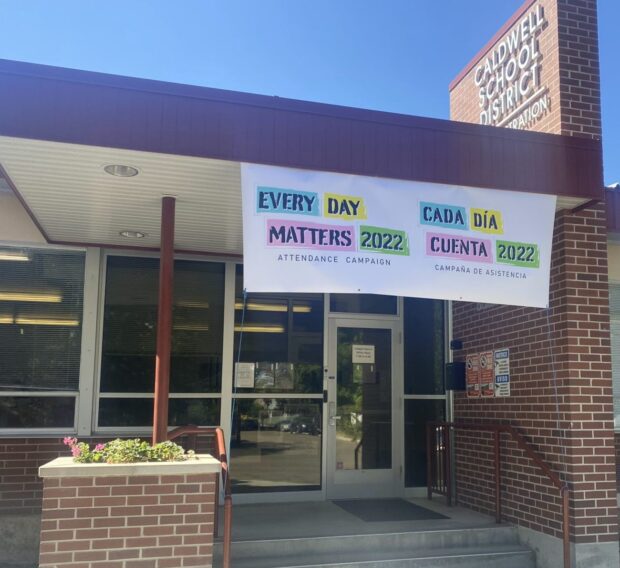
That can look like public information campaigns, extracurricular activities to draw students to school, or solving transportation problems, according to the report.
Teachers must inform parents when their child is not at grade level.
The overwhelming majority of parents have been under the false impression that their children’s academic achievement is unaffected by the pandemic, researchers found.
Collaborate with other states to find out what’s working (and what’s not).
Most states have now implemented “science of reading” reforms, including Idaho. And many have implemented cell phone bans. But states’ approaches to these changes have varied, and it’s unclear which work best.
“Such policy innovation can be a strength of our federal system – but only if we learn which of those efforts are working (and which are not) and spread the most effective solutions,” the report said.
More on the Education Recovery Scorecard

A Harvard-Stanford-Dartmouth project that allows year-to-year comparisons across states and districts
The Education Recovery Scorecard analysis by researchers at Harvard, Stanford and Dartmouth allows year-to-year comparisons across states and districts, providing the most comprehensive picture yet of how American students are performing since COVID-19 first disrupted learning, according to Annie Ma and Jocelyn Gecker of The Associated Press.
In some cases, the analysis shows school districts are struggling, even though their students may have posted decent results on state tests. That’s because each state adopts its own assessments, and those aren’t comparable to each other. Those differences can make it impossible to tell whether students are performing better because of their progress, or whether those shifts are because the tests themselves are changing, or the state has lowered its standards for proficiency. For example, Wisconsin, Nebraska and Florida seem to have relaxed their proficiency cutoff in math and reading in the last two years, Kane said, citing the analysis.
The scorecard accounts for differing state tests and provides one national standard. For Idaho, researchers used the Idaho Standards Achievement Test.
Find out more about the scorecard methodology here.
Recovery within districts remains divided by race and class, especially in math scores
Higher-income districts have made significantly more progress than lower-income districts, with the top 10% of high-income districts four times more likely to have recovered in both math and reading compared with the poorest 10%. And recovery within districts remains divided by race and class, especially in math scores. Test score gaps grew by both race and income.
“The pandemic has not only driven test scores down, but that decline masks a pernicious inequality that has grown during the pandemic,” said Sean Reardon, a Stanford sociologist who worked on the scorecard. “Not only are districts serving more Black and Hispanic students falling further behind, but even within those districts, Black and Hispanic students are falling further behind their white districtmates.”
The Associated Press’ Annie Ma, Jocelyn Gecker and Sharon Lurye, and Idaho Education News’ Randy Schrader contributed to this report.